

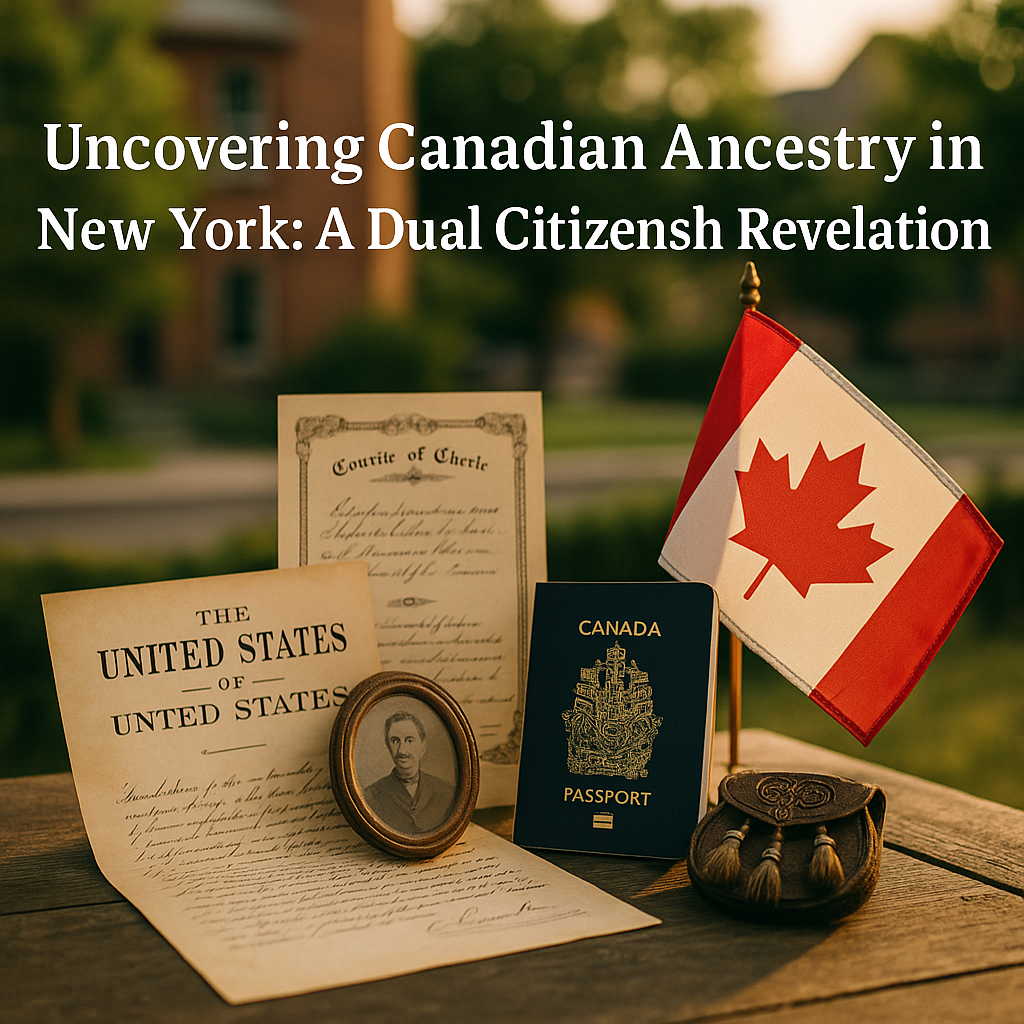
In a surprising revelation, Clinton County, New York, stands out with 6,988 residents claiming Canadian or French Canadian ancestry, representing one in every 11 individuals among its population of 78,493.
Following closely behind, Franklin County boasts a ratio of one in 14, while St. Lawrence County follows at one in 17. These counties rank as the top three among all 62 New York counties for Canadian ancestry.
A significant shift occurred in December 2025 with the implementation of a Canadian law that granted Canadian citizenship to individuals tracing their lineage to a Canadian ancestor. The next step for these residents is to provide documentation to access the full rights and benefits of their newfound status.
Exploring the Undercount of Ancestry Figures
While the census data provides insights into ancestry based on self-disclosure, the figures may not accurately reflect the current number of Canadians in New York. This discrepancy arises from the fact that having just one Canadian ancestor is sufficient to pass down citizenship to all direct descendants.
Moreover, historical information has been lost over time, with names undergoing transformations. For instance, surnames like Leblanc transformed into White, Charpentier into Carpenter, and La Rivière into Rivers. Families with ‘dit names,’ a common practice in Quebec parish records, often retained one part of the surname while discarding the other, leading to obscured ancestral connections.
Examining Clinton County, alongside the 6,007 residents claiming French Canadian ancestry, an additional 11,756 individuals identify with French ancestry. Research by historian Patrick Lacroix revealed that around 90% of residents born in 1860 north of the border were of French Canadian descent. The French-speaking community in the county originated from Quebec rather than France, showcasing the diverse migration patterns.
Census records capture how individuals perceive their ancestry, while Canadian citizenship by descent necessitates a documented family lineage. A single Canadian ancestor renders their descendants, including distant relatives, eligible for citizenship, highlighting the intricate web of familial connections.