

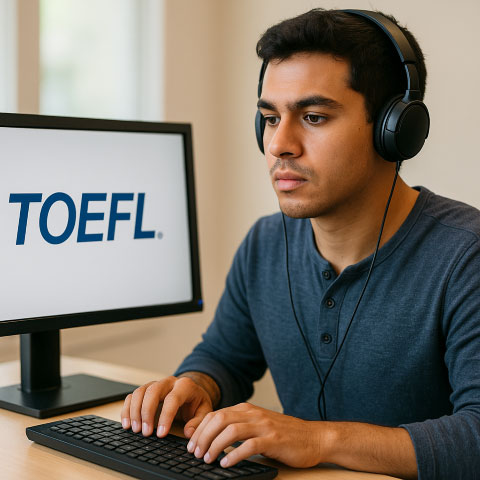
Canada Now Accepts TOEFL Essentials for Permanent Residency Applications
In a move that could reshape the immigration journey for thousands of applicants, Immigration, Refugees and Citizenship Canada (IRCC) has added TOEFL Essentials to its list of approved English language proficiency tests for permanent residency (PR) applications. This update, effective August 2025, expands the options available to candidates applying through Express Entry and other economic immigration streams.
Language testing is one of the most critical steps in the immigration process, as it directly affects eligibility and ranking under the Comprehensive Ranking System (CRS). By opening the door to TOEFL Essentials, Canada is signaling a stronger commitment to accessibility, affordability, and modernization in immigration policy.
What Makes TOEFL Essentials Different?
TOEFL Essentials is a streamlined version of the traditional TOEFL iBT, designed by ETS, one of the world’s leading educational testing organizations. Unlike its longer academic counterpart, Essentials was developed with a focus on real-world English use and practical accessibility.
The exam takes about 90 minutes to complete, compared to nearly three hours for the iBT and similar times for IELTS or CELPIP. It covers all four skills—reading, listening, speaking, and writing—and uses adaptive testing, which adjusts the difficulty of questions based on the candidate’s performance. Results are typically released within six days, making it faster than many alternatives.
One of the biggest draws is cost. At roughly $100–120 CAD, TOEFL Essentials is less than half the price of IELTS or CELPIP, both of which generally cost close to $300 CAD. For families applying together, this price difference can translate into significant savings. The exam can also be taken online from home, with human and AI proctoring to ensure test security. This flexibility makes it especially valuable for candidates living in rural areas or countries with limited access to testing centres.
Why This Decision Matters
The acceptance of TOEFL Essentials is not just a technical update, it carries meaningful consequences for immigration hopefuls. For applicants in regions without reliable access to test centres, an online option removes a long-standing barrier and levels the playing field. For those already stretching their budgets to cover application fees, medical exams, and document preparation, the affordability of this new test makes the process much more achievable. Faster result times also mean that candidates invited through Express Entry can act quickly and avoid missing tight submission deadlines.
Canada’s decision also aligns its system with international best practices. Countries such as Australia and the United Kingdom already recognize a wider range of English tests, and Canada’s move signals that it is keeping pace in a global race for skilled talent. By broadening its approved test list, Canada is making itself more attractive to individuals weighing multiple destinations for immigration.
What Applicants Should Know
Although TOEFL Essentials is now accepted, applicants must still pay careful attention to program requirements. The academic TOEFL iBT remains ineligible for permanent residency applications, even though it is widely recognized for study abroad. Similarly, TOEFL Essentials cannot yet be used for the Student Direct Stream, which is primarily for international students applying for study permits.
Results must also be reported directly from ETS to IRCC to be considered valid. Self-reported or unofficial scores will not be accepted. Additionally, applicants need to make sure their scores align with the Canadian Language Benchmark (CLB) levels required for their program. For example, Federal Skilled Worker applicants usually need at least CLB 7, while the Canadian Experience Class may accept CLB 5 or 6 depending on the occupation. Understanding how TOEFL Essentials scores translate into CLB levels will remain an important part of preparing a successful application.
TOEFL Essentials and CLB Levels
Since IRCC uses the Canadian Language Benchmark system to measure proficiency, applicants need to know how their TOEFL Essentials results translate into CLB levels. While ETS reports scores on its own scale, IRCC has published equivalency tables that map these results to the CLB framework.
For most immigration programs, a CLB 7 is the minimum threshold, which represents moderate to strong proficiency in English. On the TOEFL Essentials scale, this typically corresponds to a score in the mid-8 range out of 12 in each of the four skills. Higher CLB levels, such as CLB 9 and above, usually require scores closer to 10 or above in each skill, reflecting strong command of both written and spoken English. CLB 5 or 6, which may be sufficient for certain Canadian Experience Class pathways or provincial nominee streams, is equivalent to lower scores in the 6 to 7 range on TOEFL Essentials.
This means that applicants must not only focus on achieving an overall good performance but also ensure consistency across all four skills. Since IRCC assesses each skill individually rather than relying on an average, weak performance in one area can affect eligibility, even if the overall score appears competitive. For example, an applicant scoring very high in reading and listening but low in speaking may not meet the CLB threshold required for their program.
The Broader Impact on Immigration
Beyond its immediate impact, the decision to accept TOEFL Essentials reflects a broader shift in Canada’s immigration policy toward fairness and modernization. Critics have long argued that language testing was too expensive and rigid, creating unnecessary stress for applicants. By recognizing a test that is faster, cheaper, and easier to access, IRCC is addressing these concerns while maintaining high standards for language ability.
This move also strengthens Canada’s reputation as a country that combines strong immigration standards with an inclusive approach. By lowering barriers without compromising quality, Canada is reinforcing its image as one of the most welcoming and forward-thinking destinations for newcomers worldwide.
The inclusion of TOEFL Essentials in Canada’s list of approved English tests marks a significant shift in how applicants can approach one of the most important eligibility requirements for permanent residency. For many applicants, it may mean the difference between meeting the language requirement or being left behind due to cost, geography, or timing.
As Canada continues to refine its immigration system, decisions like this highlight a commitment to fairness and to attracting diverse global talent. For skilled workers, international graduates, and families considering a future in Canada, TOEFL Essentials now offers a more affordable, flexible, and efficient way to move closer to permanent residency.