

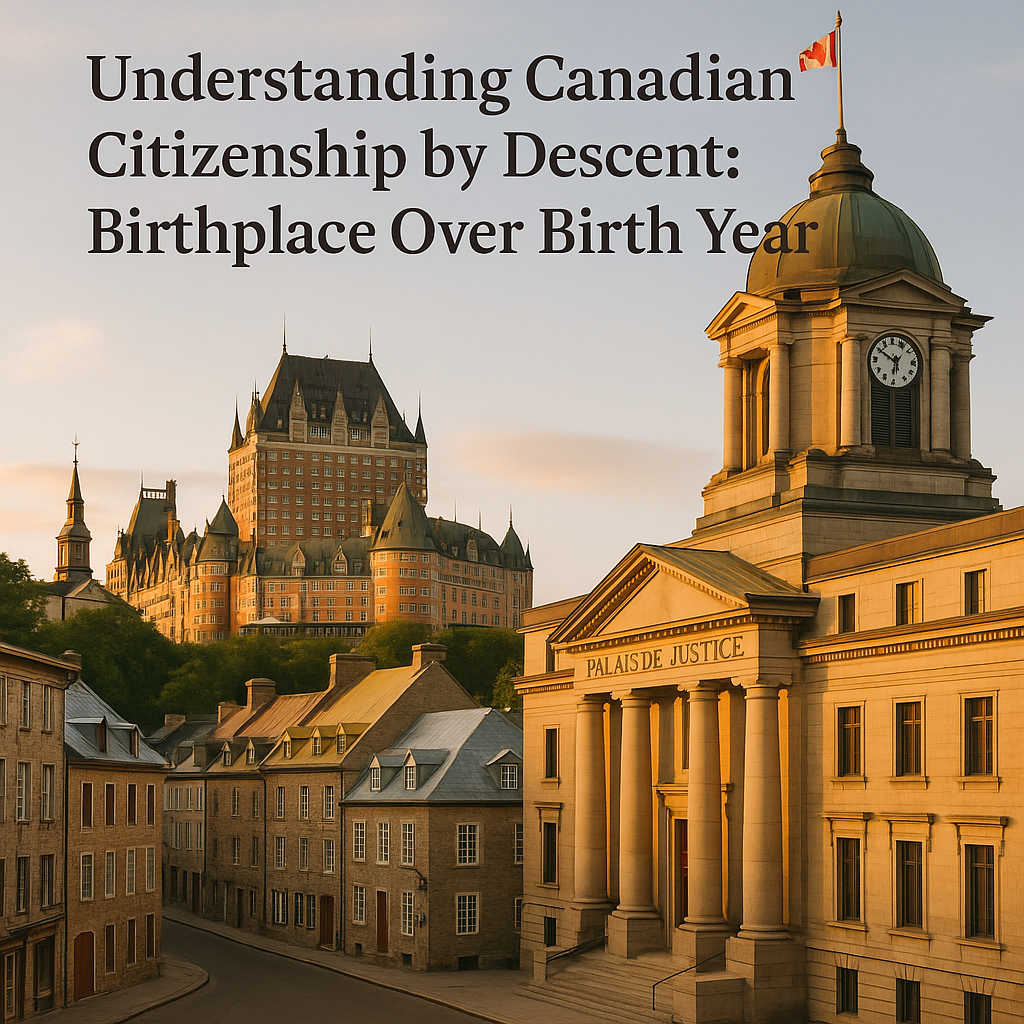
Your ancestors’ birthplace in Canada East in 1850 may hold the key to your Canadian citizenship claim, even before the country’s official establishment in 1867. Canadian citizenship by descent allows the transfer of citizenship from parent to child born outside Canada, emphasizing the importance of tracing an unbroken lineage to a Canadian ancestor. The Citizenship Act does not specify an earliest birth date or mention Confederation in its criteria. The focus is on the birthplace of the ancestor, not the birth year, as confirmed by legal experts. Discover why understanding the birthplace, not the birth year, is crucial in claiming Canadian citizenship by descent.
Emphasis on Birthplace
The Citizenship Act prioritizes the birthplace of the ancestor over the birth year, as highlighted by legal professionals. The Act’s inquiries revolve around the location and status of the ancestor, such as their birthplace and residency in Canada, rather than their birth year. This shift in perspective underscores the significance of where the ancestor was born, particularly in regions like Canada East, now Quebec, with a continuous legal history. Legal interpretations and historical references support the notion that a birth in Canada East before Confederation qualifies as a Canadian birth under the Act.
Legal experts and associations, including the Canadian Immigration Lawyers Association, have analyzed the implications of pre-Confederation births on citizenship claims. While the legal stance leans towards recognizing such births as valid for citizenship purposes, the absence of a court ruling on this specific issue leaves room for interpretation. Seeking guidance from experienced citizenship lawyers specializing in descent claims can provide clarity and assurance in navigating complex citizenship laws.
Redefining Citizenship
The assumption that Canadian citizenship only existed post-1867 overlooks the nuanced evolution of Canada’s legal and political landscape. Contrary to popular belief, the establishment of Canada as a country in 1867 did not mark the sudden inception of citizenship rights. The concept of modern citizenship in Canada emerged much later, in 1947, reshaping the understanding of national identity and belonging. The intricate process of Confederation and the subsequent legal developments underscore the complexity of defining citizenship within the Canadian context.