

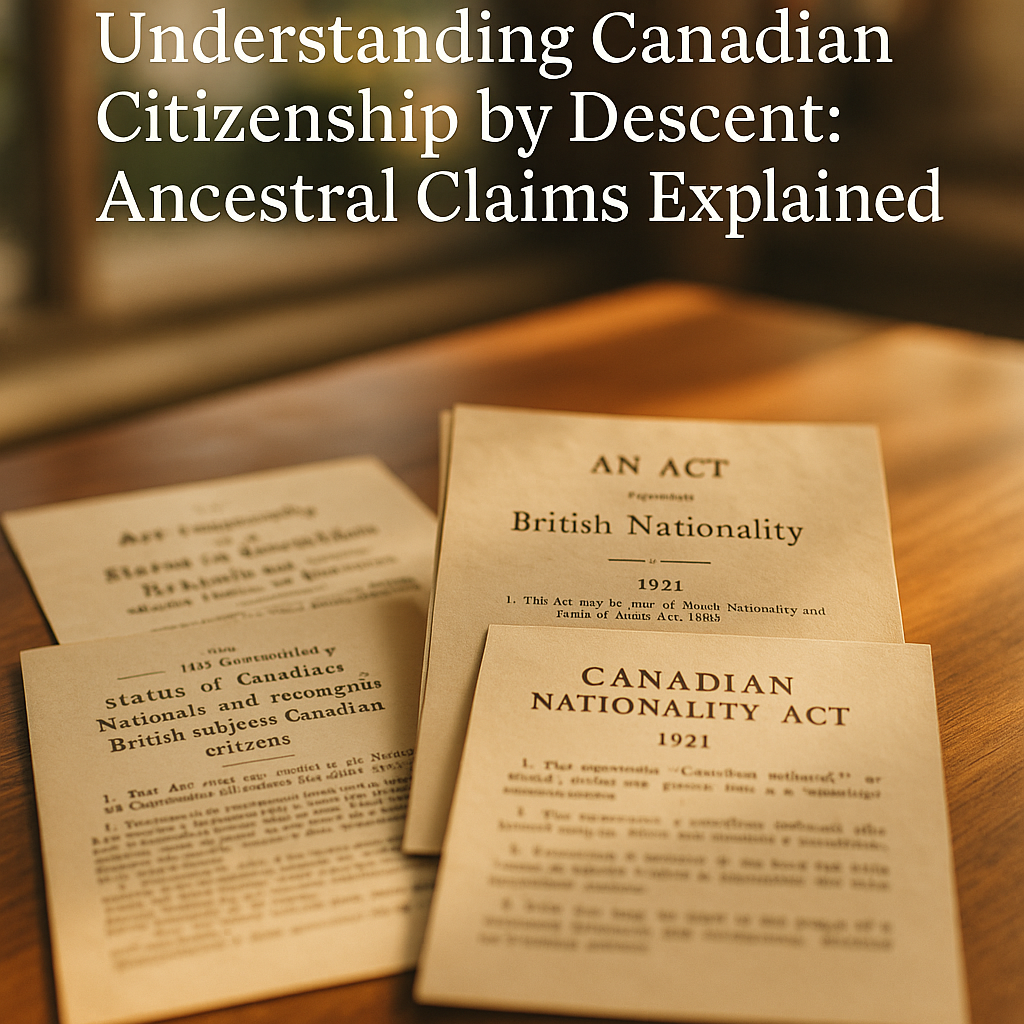
Canadian citizenship was not established as a legal status until January 1, 1947. Prior to this date, individuals born in Canada were considered British subjects.
If your lineage traces back to an ancestor who passed away before 1947, they were never officially recognized as a Canadian citizen during their lifetime. It may seem like the lineage ends there, but descendants, including Americans with Canadian ancestry, still have a valid claim to Canadian citizenship by descent based on their ancestor’s status, even if the relative passed away before being able to assert this right.
Canada’s Citizenship Act includes provisions known as ‘Citizen despite death of parent’, often referred to as ‘death bridges’. These clauses serve a specific purpose: to ensure that a claim is not invalidated solely because the ancestor passed away before the relevant citizenship laws were enacted.
This article will delve into the scenarios where citizenship by descent applicants can pursue a claim, such as when their ancestor was born or naturalized in Canada or Newfoundland and Labrador but passed away before specific dates. Understanding how the timing of your ancestor’s death impacts your citizenship claim is crucial in navigating the legal framework.
How does the date of my ancestor’s death impact my citizenship claim?
The timing of your ancestor’s death determines the relevant section of the Citizenship Act that applies to their citizenship status. This, in turn, influences your own eligibility for Canadian citizenship by descent.