

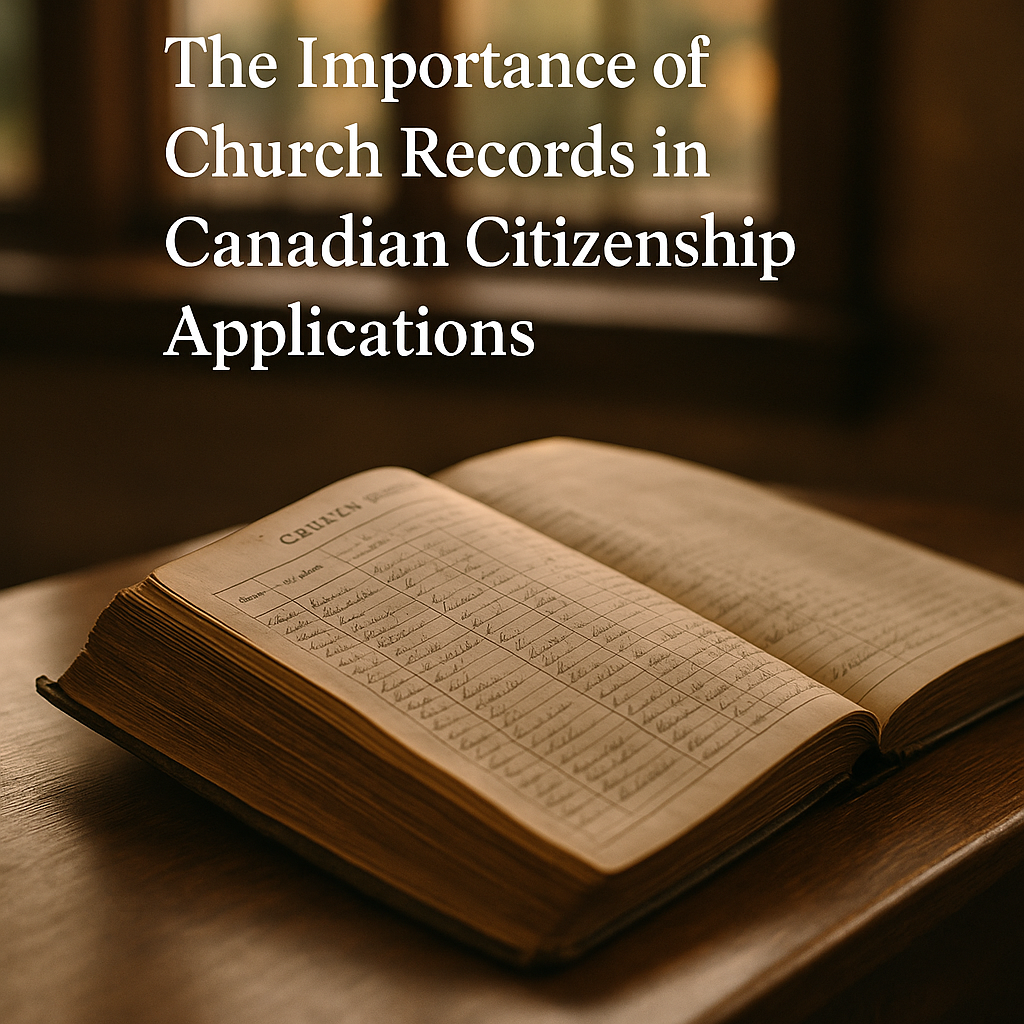
Acquiring the necessary documents for a proof of citizenship application can be a time-consuming process, especially for individuals with Quebec ancestry. Church records play a crucial role in citizenship claims through Quebec ancestors due to the historical significance of these documents.
Understanding Baptismal Records
Baptismal records are religious documents created by churches during a child’s baptism. These records typically include details such as the baptism date, parish information, names of parents and godparents, and officiating priest. They are considered valid supporting documentation by Canada’s citizenship department for citizenship applications.
Significance of Church Records for Quebec Ancestry
Prior to Quebec centralizing civil-status registration in 1994, parish registers were the primary source for recording births, marriages, and deaths. These records served as vital documentation for Quebec families to prove vital events. Even after 1994, historical church entries were often used as proof of events, necessitating current copies from Quebec’s civil registrar for official purposes.
Obtaining Documents from the Directeur de l’état civil (DEC)
The DEC is responsible for issuing certificates or copies of acts related to vital events. For Canadian citizenship applications, IRCC prefers full-color copies of acts. Access to these documents is restricted to protect privacy, requiring valid reasons for requesting them. Certain family members can request records without additional proof, ensuring accessibility for essential documentation.