

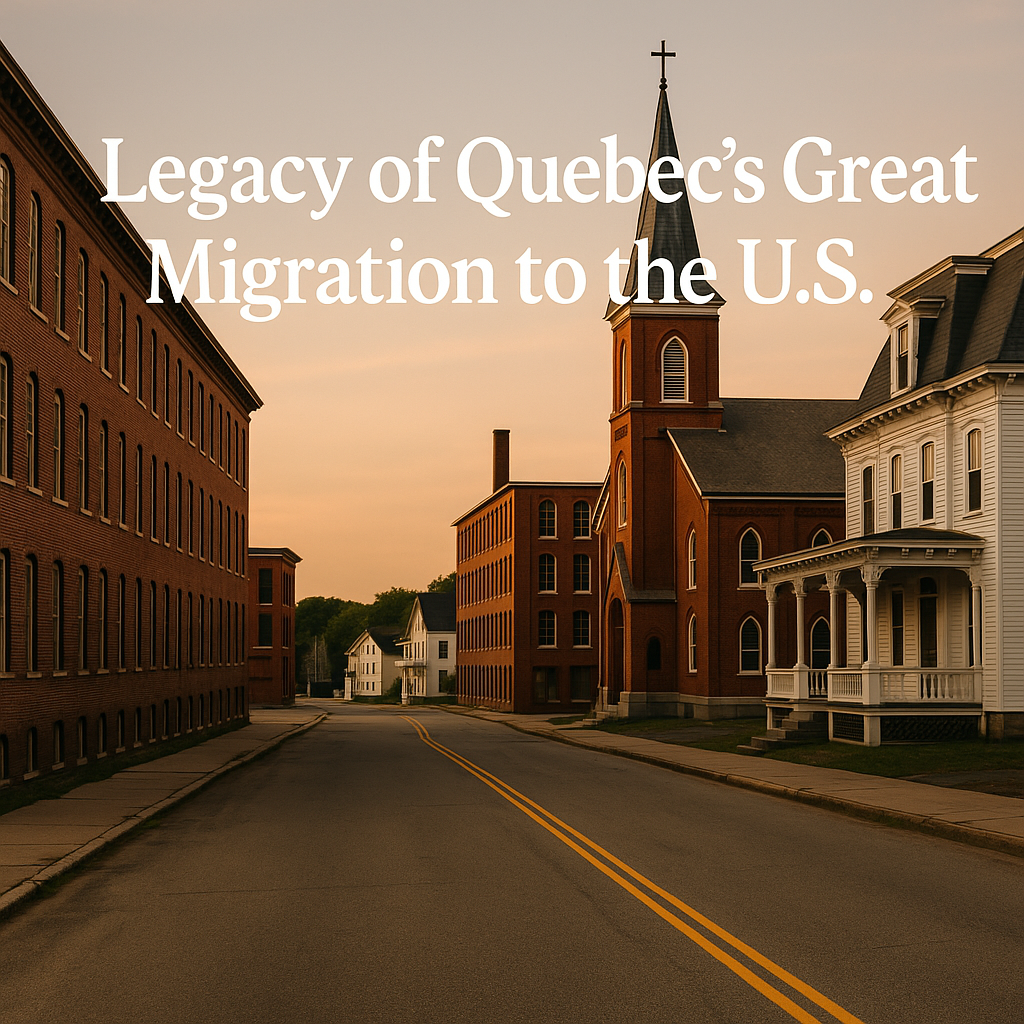
From 1840 to 1930, nearly one million French Canadians left Quebec for the U.S. seeking a new life.
Today, a significant change in Canadian law has granted their American descendants Canadian citizenship by descent, regardless of ever setting foot in Canada.
Understanding the Great Hemorrhage
During the 19th and early 20th centuries, around 900,000 Quebec residents migrated to the U.S., known as la grande saignée, driven by overpopulation and limited economic prospects in Quebec.
The allure of industrialization in New England and improved transportation via railways facilitated this mass exodus.
Many settled in New England mill towns, forming close-knit communities known as les Petits Canada.
Enduring Influence of Little Canadas
The impact of this migration is still felt today, with cities like Lowell, Fall River, Manchester, Nashua, Burlington, and Lewiston maintaining strong French-Canadian ties.
Celebrations like La Kermesse in Biddeford, Maine, and the Leominster French Canadian Festival in Massachusetts honor this heritage.
Traditional Quebecois dishes like tourtière, poutine, and crêtons remain popular in New England, reflecting the lasting cultural legacy.