

A recent change in Canada’s citizenship laws has prompted many Americans to delve into their family history, searching for crucial documents that can establish their Canadian citizenship by descent.
Hidden away in attics and old shoeboxes are birth certificates, marriage records, and baptismal certificates that are now more than just sentimental keepsakes—they are the key to unlocking Canadian citizenship through lineage.
If you suspect you have Canadian ancestry, here are the essential documents you’ll need to gather to prove your eligibility for Canadian citizenship by descent.
Birth Certificates
Following the removal of the first-generation limit in December 2025, birth certificates have become central to applications for Canadian citizenship by descent. To establish your lineage, you’ll need to provide birth certificates for each person in the generational chain leading back to your Canadian ancestor.
Long-form birth certificates, which detail the names of both parents, are crucial for proving the parent-child connection at each step. Short-form certificates are generally insufficient for this purpose.
Additionally, a Canadian-born ancestor’s birth certificate not only confirms parentage but also serves as evidence of Canadian citizenship, as Canada traditionally grants citizenship to individuals born on its soil.
Baptismal Records
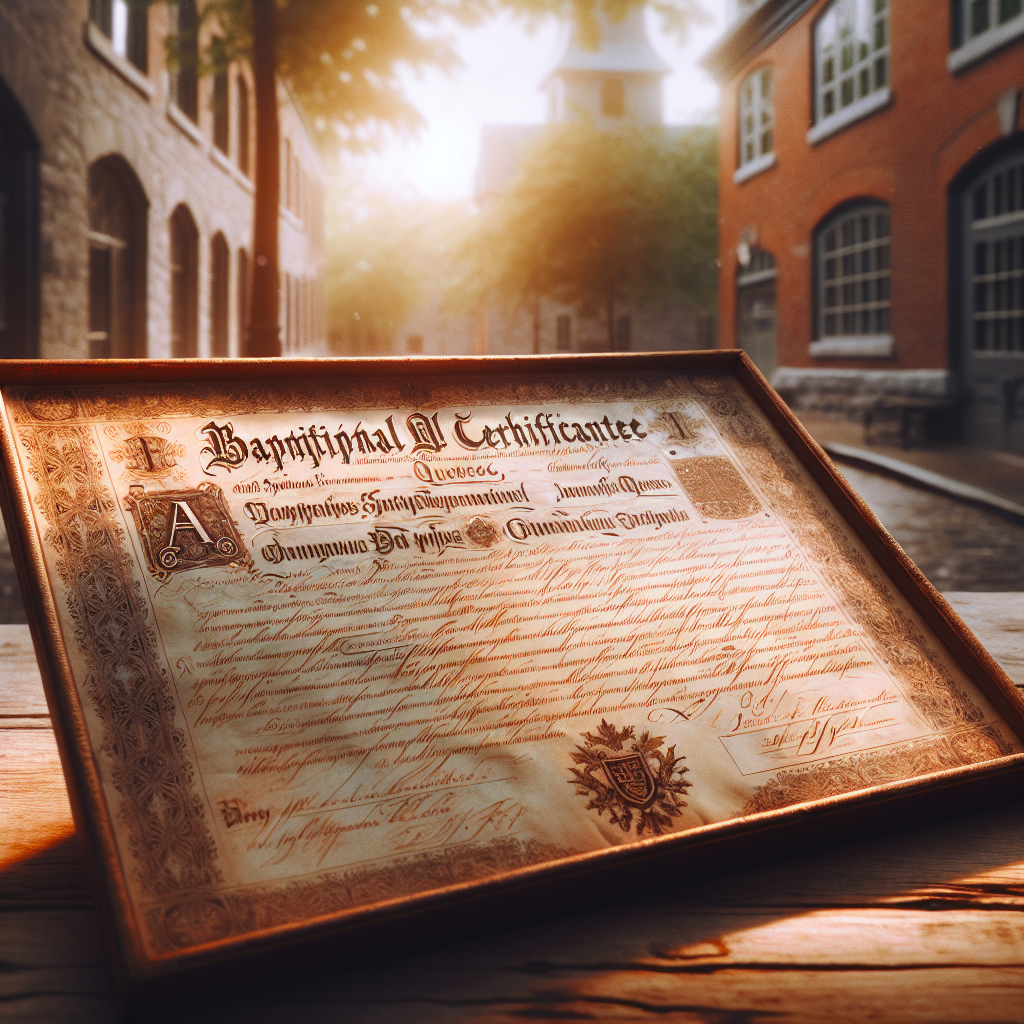
In regions like Quebec, the Maritimes, and parts of Ontario with strong religious communities, churches maintained records long before civil registration systems were established. For ancestors born in these areas, baptismal records can serve as the earliest reliable proof of existence.
Genealogy platforms like FamilySearch provide access to historical records, including Quebec’s archives dating back to 1621, which are housed at the Bibliothèque et Archives nationales du Québec (BAnQ). The demand for certified copies of these records has surged in recent years.